Introduction
In her book, The Serviceberry: Abundance and Reciprocity in the Natural World, Robin Wall-Kimmerer writes:
They are all around me, Cedar Waxwings and Catbirds and a flash of Bluebird iridescence. I have never felt such a kinship to my namesake, Robin, as in this moment when we are both stuffing our mouths with berries and chortling with happiness. The bushes are laden with fat clusters of red, blue, and wine purple in every stage of ripeness–so many you can pick them by the handful.”1
In this passage, Kimmerer sets the stage for building a community on the foundation of sharing the abundance around us, rather than hoarding it for our individual needs. Nature’s economy, in contrast to a capitalist economy, treats abundance as a decree to distribute and share, not to hoard. Therefore, the challenge before us in a moment of ecological overshoot is to rebalance our extraction-based capitalist economy toward what Kimmerer calls a gift economy.2
Conflict
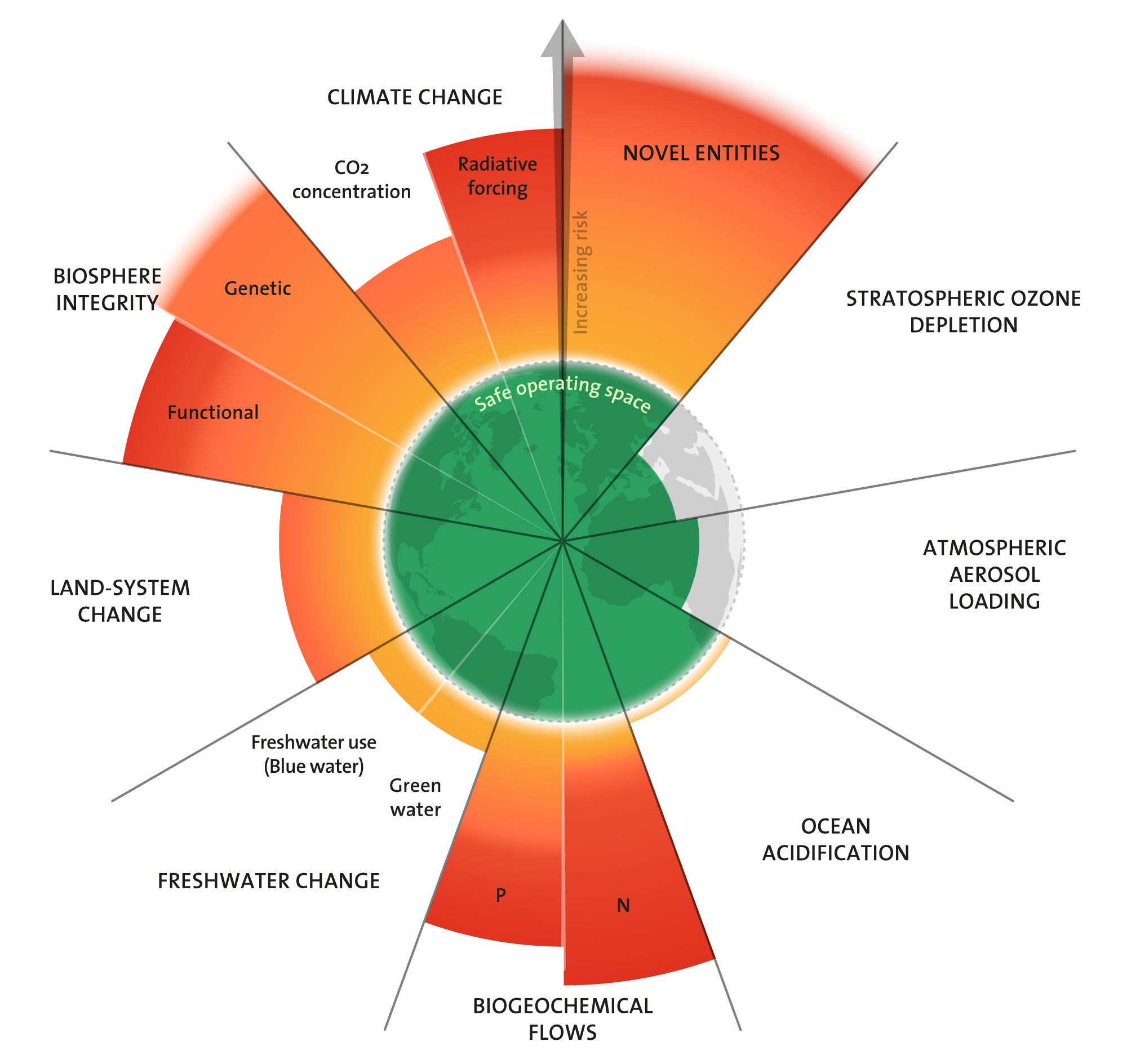
The ecological collapse we are witnessing is marked by accelerating biodiversity loss,3 acute climate disruption, and the crossing of critical planetary thresholds, such as the 1.5-degree Celsius global temperature threshold. Human pressures have pushed the Earth into a period of ecological overshoot,4 in which demands on natural systems stemming from an extraction mindset exceed ecosystems’ capacity to regenerate. Graph 1 shows that six of nine planetary boundaries, including climate change, are being crossed, while pressure across all boundary processes is increasing.
Another conflict area is our continual “fight” for territorial and resource ownership, which pits countries against one another, creating civil, regional, and national wars.
Task Ahead
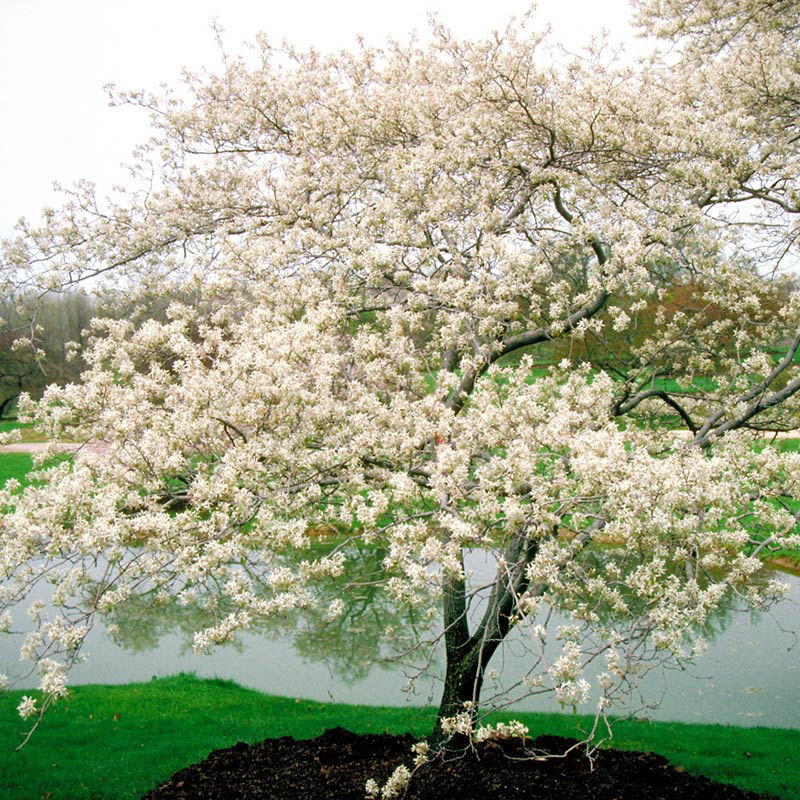
If we can recalibrate our lens to see ecological networks as interdependent and collaborative systems, as Kimmerer so eloquently describes the niche of Amelanchier arborea (Serviceberry), there is time to transition from an extractive market economy toward a regenerative “gift economy” built on reciprocity, shared abundance, and systemic gratitude. Seeing the Earth as a natural system providing resources to be shared for the collective well-being of everyone. We would lay the foundation to address conflicts created by our selfish tendencies.
Kimmerer’s Premise
In Earth’s ecosystems, plants use photosynthesis6 to build the foundation that supplies food for all living organisms. While the products of their effort are “free of charge” to other living organisms, they cost the plant energy. In a sense, plants invest in their relationships to all members of their ecosystem.
In nature, if a plant’s gifts go unused, the gifts will perish. Concerning Serviceberries, if ecosystem members hoard berries beyond what they can use, the excess will spoil and go to waste. Security comes from giving them away7. Sharing, to benefit the common good, builds social and ecological capital.
In Kimmerer’s world, the shift occurs when members of the ecosystem show gratitude for the gifts they receive for free. She points out that a simple “thank you” changes a consumer of the gift from a passive taker into an active, respectful participant in the ecosystem. The relationship between the Serviceberry and consumers evolves into a mutually beneficial one. Many consumers give back to the Serviceberry; for example, bees pollinate the flowering tree, helping it produce seeds and grow, thereby preserving nature’s diversity, feeding organisms, and supporting the entire food chain.
From a human perspective, showing gratitude for the gifts we receive from our plant friends could take many forms: maintaining healthy soils, using pesticides carefully and strategically, or harvesting with sustainable techniques. Under proper care, the harvests can be bountiful. So instead of hoarding the fruits of the Serviceberry’s labor, we would share with our fellow community members so that we all benefit. With a spirit of gratitude and sharing, we might successfully address the roughly 650 million people worldwide who regularly experience hunger.8
A Capitalist Counterpoint
Around the world, consumption-oriented economic structures drive the web of commerce that connects diverse cultures. The centerpiece of these economic structures is the extraction and processing of the Earth’s resources. Modern economics views the living world simply as “natural resources” or “raw materials” to be mined rather than relationships to be respected. Humans take more from Mother Earth than we give back. Depletion creates a scarcity mindset that further embeds consumption as the “way out.” Kimmerer points out that scarcity supports a system that favors higher prices and corporate profits.
…create scarcity instead of abundance, that promotes accumulations rather than sharing. 9
Sequestration and accumulation are two drivers that widen America’s wealth gap, making a sharing economy harder to achieve. A few examples:
- Public tax dollars fund external infrastructure, but internal amenities remain a restricted commodity for those with wealth.
- Large private timber, mining, or agricultural companies buy massive tracts of land, sequestering them for extraction.
- Major technology companies build self-contained campuses with private cafeterias, gyms, and childcare.
- Resources are hoarded for corporate profit rather than community use.
In capitalism, status is often derived from how much you hold back from the common good.
Finally, buying everything through a transactional market isolates us from the natural systems that sustain us. We buy everything in large supermarkets or warehouse clubs like Costco or Sam’s Club and rarely see how our food is grown, harvested, and made available to us. We buy our meat, chicken, and fish, and never witness how these living things are slaughtered in mega-factories.
A capitalist economy appears blind to the adverse impact it has on sharing and reciprocity as a path for diverse cultures around the globe to thrive.
Gift Economy
A gift economy is a system in which we exchange goods or services freely without immediate or direct financial payment. Kimmerer sees gift economies as engendering a culture of gratitude and reciprocity, resulting in more responsible use of Earth’s resources. She writes:
Receiving a gift from the land is coupled to attached responsibilities of sharing, respect, reciprocity, and gratitude-of which you will be reminded.10
Kimmerer points out that a gift economy is all around us if we open our eyes. It’s a natural extension of being human. We garner joy from sharing, showing respect, and giving back to those who are generous. However, I wonder if humans experience the awe of Earth’s gifts to us through simple acts of gratitude? Does showing gratitude for what we received build stronger relationships within our ecosystems? When I reflect on these questions, I am drawn to a piece created and produced by Louie Schwartzberg and narrated by Brother David Steindl-Rast. If you haven’t seen this piece, it is worth five minutes of your time.
Here are some examples of our gift economy at work:
- Open-source software, such as Wikipedia, and Creative Commons licenses, where creators give away their labor to build a robust, shared infrastructure that we all can use and enjoy.
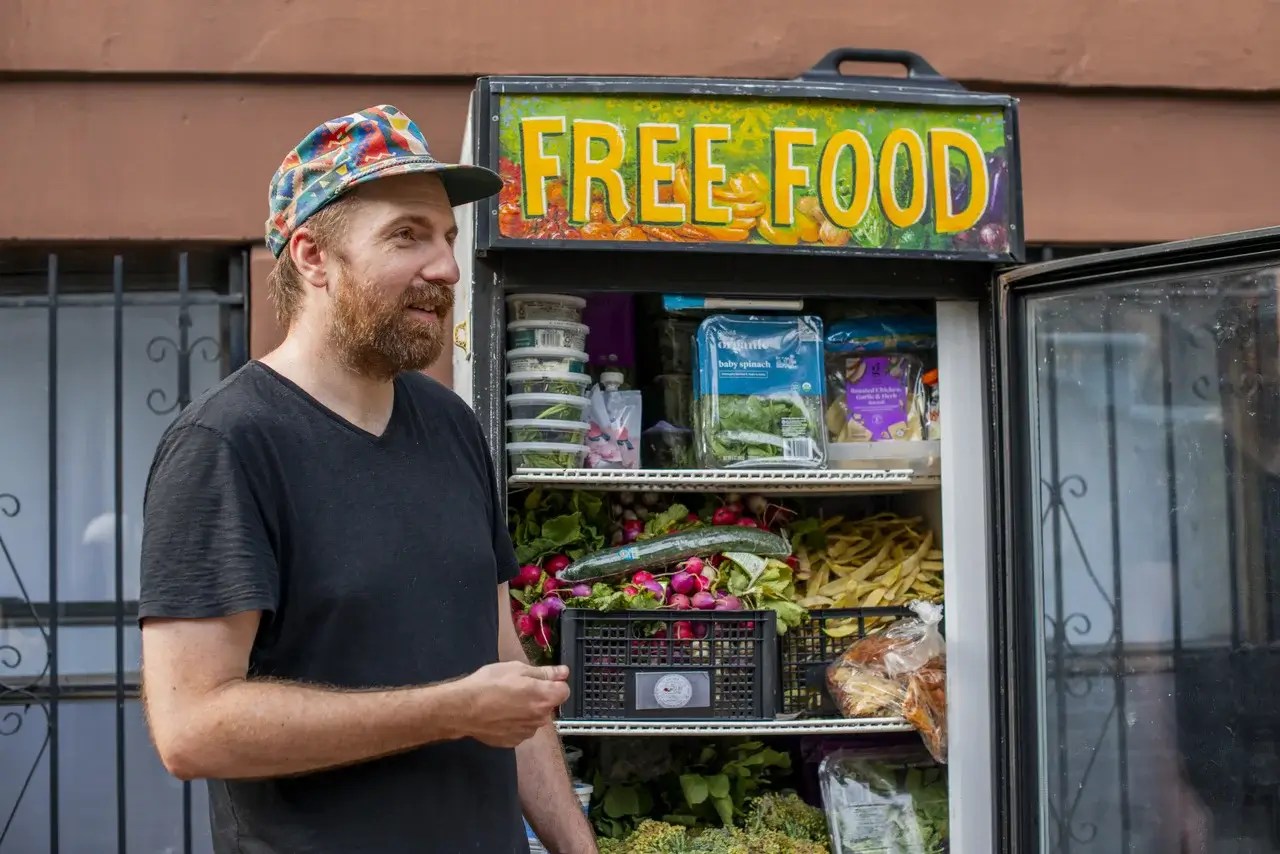
- Public, 24/7 refrigerators in communities that let neighbors drop off fresh food or take what they need with zero eligibility tests.11
- In Milwaukee, where I live, the Milwaukee Tool Sharing Library makes available at no cost tools for any project.12
Reality Checks
Critics argue a gift economy works fine for a small tribe or a village, but can it work for a globalized world of billions? Of course, scalability of any worthy project is always an issue. However, it doesn’t have to transpire in one grand project. If we individually and collectively adopt attitudes of gratitude and reciprocity, we will be drawn into a mindset of sharing and not taking more than we need.
Another question that Kimmerer reflects on in her book is how to handle people who take from the collective pot without giving back. While the act of sharing and giving back is a human quality, selfishness is also a human quality. But let’s not allow selfishness to hinder us from building a culture of reciprocity and gratefulness.
Is it possible for a gift economy to replace a free-market economy? Kimmerer answers this with a reality check.
It doesn’t need to entirely replace the market economy overnight; rather, it serves as a moral framework to temper and reshape market behaviors.
Conclusion
Let’s try to envision shifting to a more robust gift economy as something other than a sacrifice. It could be a stress valve that moves us away from the anxiety of competition and hoarding resources and into the safety of community.
The wellbeing of the Earth needs us to reimagine how humans can live sustainably within complex systems. Robin Wall-Kimmerer, in The Serviceberry, shows us how a humble plant can help us understand and embrace the value of reciprocity and gratitude. The Earth offers us a guide for creating a kinder world—if only we are willing to embrace it. A gift economy, blended more seamlessly into a capitalistic economy, is a more equitable path to a sustainable future.
I love the practice from indigenous cultures of not taking more than you need. Kimmerer offers us the final template with her guidelines for an “honorable harvest.”13
- Know the ways of the ones who take care of you so you can take care of them.
- Introduce yourself. Be accountable as the one who comes asking for life.
- Ask permission before taking. Abide by the answer.
- Never take the first one. Never take the last.
- Take only what you need. Take only that which is given. Never take more than half. Leave some for others.
- Harvest in a way that minimizes harm.
- Use it respectfully: Never waste what you have taken.
- Share.
- Give thanks for what you have taken and give a gift of reciprocity for what you have taken
- Sustain the ones who sustain you, and the Earth will last forever.
What if we shifted our focus from our extraction economy to an honorable harvest, following Kimmerer’s framework as a playbook? What if we, individuals and corporations, integrated these indigenous principles into our practices and ways of living? I think it would be so much easier to express our gratitude for Earth’s bounty and help protect it for future generations.
References
- The Serviceberry: Abundance and Reciprocity in the Natural World, Robin Wall-Kimmerer, p. 1, 2024 ↩︎
- The concept of a “gift economy” goes back to prehistoric times. Wikipedia offers a brief exploration of the origins of this idea. ↩︎
- World Wildlife Fund reports a 73% decline in the average size of global wildlife populations since the early 1970s. This represents a ‘system in peril’ ↩︎
- Ecological overshoot definition by the World Wildlife Fund (click here) ↩︎
- The 2023 update to the Planetary boundaries. Licensed under CC BY-NC-ND 3.0. Credit: Azote for Stockholm Resilience Centre, based on analysis in Richardson et al 2023. (click here) ↩︎
- The biological process by which plants take ultraviolet light, carbon dioxide, and water to make glucose and oxygen. ↩︎
- “Giving them away” implies that the berries from the tree are “free of charge.” ↩︎
- Action Against Hunger (click here for their website) ↩︎
- The Serviceberry: Abundance and Reciprocity in the Natural World, Robin Wall-Kimmerer, p. 25, 2024 ↩︎
- The Serviceberry: Abundance and Reciprocity in the Natural World, Robin Wall-Kimmerer, p. 9, 2024 ↩︎
- See Free Food picture ↩︎
- https://mkelibrary.org/ ↩︎
- The Serviceberry: Abundance and Reciprocity in the Natural World, Robin Wall-Kimmerer, p. 64-65, 2024 ↩︎


Leave a comment