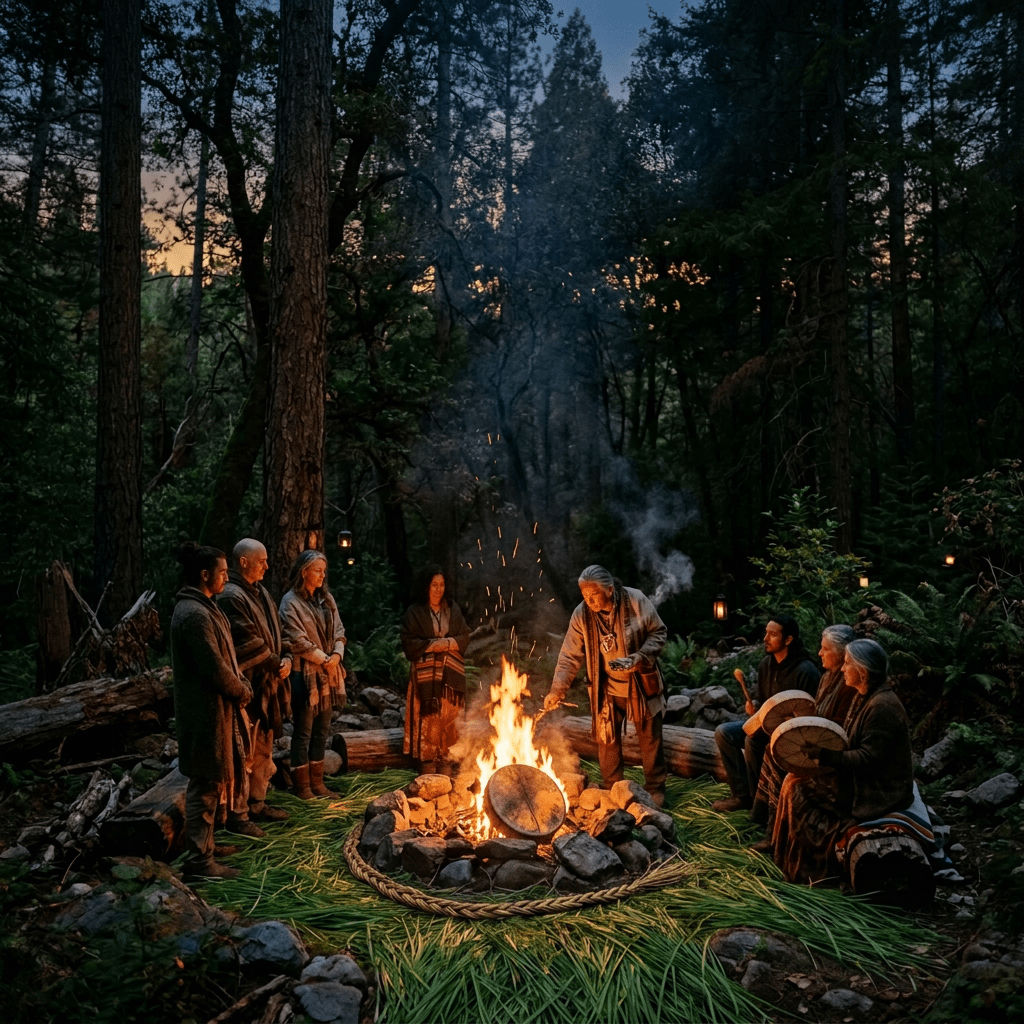
Near the very end of Braiding Sweetgrass1, published in 2013, Robin Wall-Kimmerer writes in her chapter titled Shkitagen: People of the Seventh Fire about the hidden mystery of ‘fire’ for indigenous peoples. Lighting a fire is a sacred process, one that tribal members learn early on in life from their elders. Her father taught her the art of setting up and starting a fire with a single match, no 21st-century aids.
Fire building was a vital connection to those who came before.2
She writes that fire, often seen as a destructive force, can also be a creative one. When used strategically, fire can shape a forest and clear debris so that all the plants and trees can thrive. Fires regenerate the soil with important nutrients. She explores the rich meaning of fire for indigenous peoples.
The Seventh Fire Prophecy is an ancient Anishinaabe3 oral tradition that outlines seven epochs in the history of Turtle Island. Turtle Island is the indigenous peoples’ name for the North American continent. The “Seventh Fire” represents a critical time where we must choose between two paths: one of extraction, consumption, and destruction, or one of spirituality and harmony with nature.
According to the Seventh Fire Prophecy, if the majority of humanity chooses the path of spirituality and harmony, then the Seventh Fire will initiate the “Eighth and Final Fire.” This final epoch will bring about an eternal fire of peace and fellowship, restoring harmony between all people and the Earth.
Wall-Kimmerer sees herself as a climate refugee based on an experience she had when a local disaster, a chemical fire, near her home required the family to vacate their home. From her personal story, she moves into the universal story playing out today in which tens of millions of people are relegated to living as climate refugees. She writes:
The waves of heat we are feeling now as a result of climate change aren’t yet as crushing as the ones that rocked us (her family) that night, but they too are out of season.4
She reflects on what she thought to save from her house if it started burning down, a question we all must face in a time of climate change.
What do you love too much to lose? Who and what will you carry to safety?5
Those in the path of climate disasters are often the most vulnerable among us, including nonhuman life. We witness weekly the ravages of climate change , and cannot escape its impact.
We cannot comfort ourselves by saying it’s going to be okay.6
She points out that in her case, she and her family could go home when the dust settled, but so many others around the world in these difficult times cannot go home and recover what they lost.
But what about Alaskan towns being swallowed alive by the rising Bering Sea? The Bangladeshi farmer whose fields are flooded? Oil buring in the Gulf? Everywhere you look you see it coming. Coral Reefs being lost to warming oceans. Forest fires in Amazonia. The Russian taiga an inferno vaporizing carbon stored there for tens of thousands of years. These are the fires of the scorched path. Let this not be the Seventh Fire. I pray we have not already passed the fork in the road.7
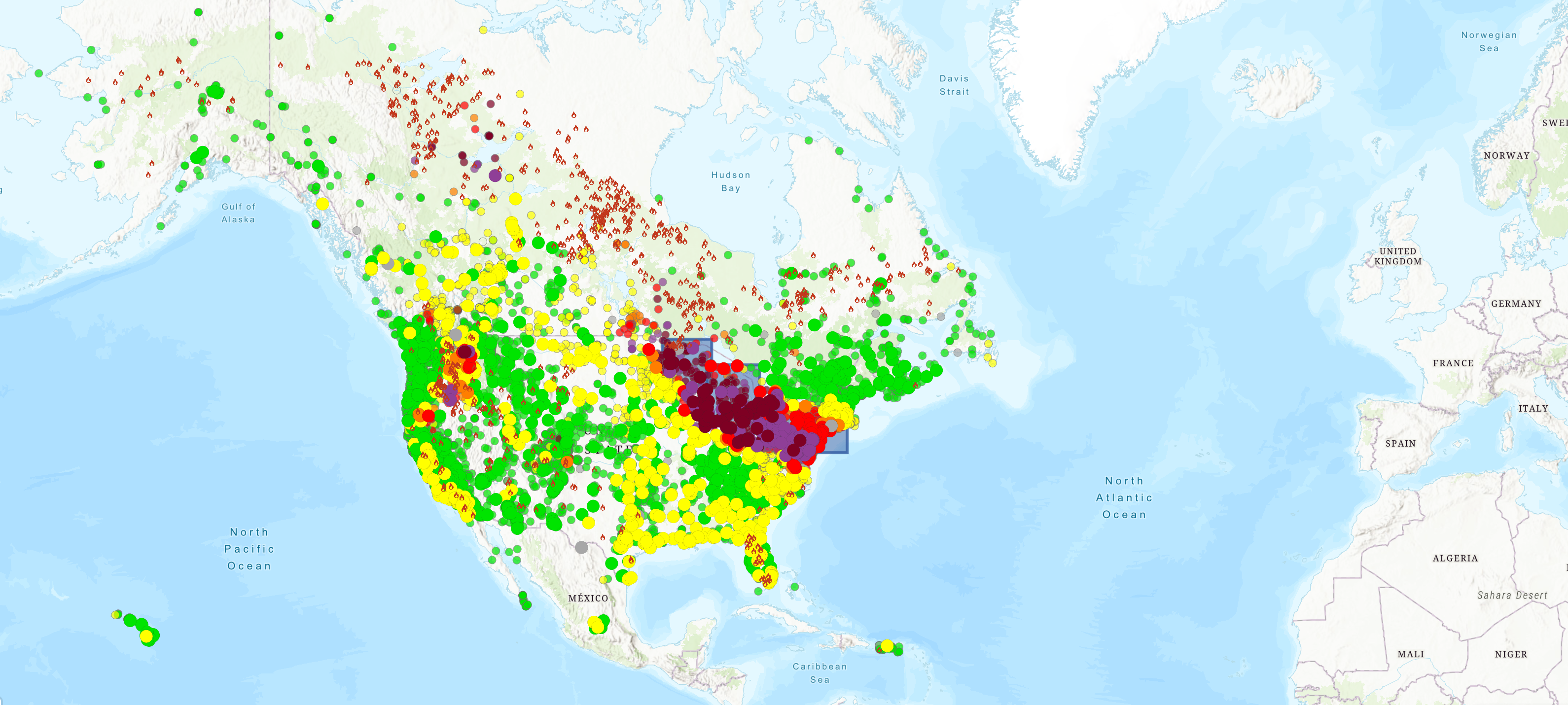
Wall-Kimmerer writes this in 2013, and yet today, we are still mired in climate disasters, left wondering which of the two paths we are destined to walk. Today, July 16, 2026 brings torrential rains and flooding in Texas8, forest fires in Utah and Ontario, Canada, and scorching heat across the Midwest and East Coast (see fire and smoke map below). Amidst this reality, we are still trying to convince climate deniers that this is not a hoax.
On July 15, 2026, President Trump signed two Executive Orders that effectively removed 3 million acres of Utah’s protected lands, Bears Ears and Grand Staircase-Escalante, for development and resource extraction. Bears Ears and Grand Staircase-Escalante are sacred homelands for Native American tribes. The lands contain hundreds of thousands of ancient cliff dwellings, rock art (petroglyphs), and burial grounds. These lands will be mined for coal, aluminum, and uranium. If history revisits itself then these lands will be abused.
Wall-Kimmerer writes:
What does it mean to be the people of the seventh fire, to walk back along the ancestral road and pick up what was left behind? How do we recognize what we should reclaim and what is dangerous refuse? What is truly medicine for the living earth and what is a drug of deception?9
if we are to take the fork in the road towards spirituality and harmony, what legacy do we want to leave future generations? Do we want to teach them so they can “recognize what to reclaim” from the damage we have unleashed. As their elders they will look to us for answers, but are we ready to take responsibility for our prior actions? Do we have the knowledge and understanding to help them reclaim Earth’s great beauty? Remaining isolated and alone will not be the answer. We need to work together to prepare future generations with the tools they will need. Wall-Kimmerer writes:
We need each other, to take a song, a word, a story, a tool, a ceremony and put it in our bundles. Not for ourselves, but for the ones yet to be born, for all our relations, both human and nonhuman (italics are mine).10
Like her father teaching her to make a one-match fire, we, the elders who have made a “mess of things” need to step up and become teachers, mentors, and role models. We need to regroup and take the path towards spirituality and harmony. In healing the planet we heal ourselves.
REFERENCES:
- In Braiding Sweetgrass, Robin Wall Kimmerer weaves scientific knowledge with a deep understanding of Indigenous wisdom to assert that we can heal our relationship with the Earth through acts of gratitude, reciprocity, and appreciation of her gifts. She’s a gifted scientist, teacher, and author. ↩︎
- Braiding Sweetgrass, page 361. ↩︎
- https://en.wikipedia.org/wiki/Anishinaabe ↩︎
- I think her meaning here is that while the fire that forced them to leave was unexpected, the climate disasters on Earth appear unexpectedly, even out of season. ↩︎
- Braiding Sweetgrass, page 370. ↩︎
- Braiding Sweetgrass, page 370. ↩︎
- Braiding Sweetgrass, page 371. ↩︎
- Texas flooding in July 2026 ↩︎
- Braiding Sweetgrass, page 371. ↩︎
- Braiding Sweetgrass, page 371. ↩︎


Leave a comment