Why should we care about ecosystem collapse? To answer this question, we first have to deeply embrace what “collapse” means. Ecosystem collapse is when the biotic or abiotic factors that comprise the system undergo an irreversible transformation. For example, the melting of permafrost due to a warming planet. Another example would be the extensive coral bleaching, nearly 40%, in the Great Barrier Reef off the coast of Australia.1 These ongoing and worrisome changes have wide-ranging impacts on our living planet.
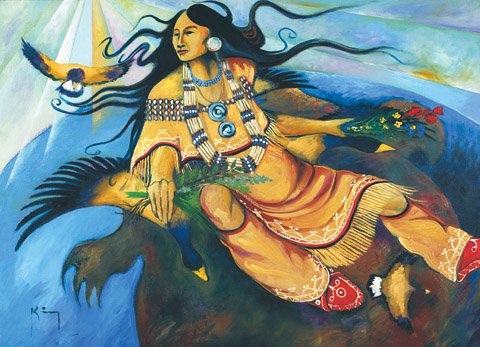
So why care? Robin Wall Kimmerer, in Braiding Sweetgrass, offers a most compelling reason to care. In her first chapter about Skywoman, an Iroquois Indian creation story, which portrays how Earth, Turtle Island, was formed, Kimmerer unvails the wisdom hidden in these indigeous stories. Skywoman was a steward of Turtle Island and all of its resources. Kimmerer writes:
It was through her actions of reciprocity, the give and take with the land, that the original immigrant became indigenous. For all of us, becoming indigenous to a place means living as if your children’s future mattered, to take care of the land as if our lives, both material and spiritual, depended upon it.2
Our species has limited time to awaken to the reality that our stewardship of the Earth and its resources is falling way short. So much so that our children’s and grandchildren’s futures are in jeopardy if critical ecosystems in the Biosphere collapse. Now is the time to care by starting to pay attention to local ecosystems that need attention and that we can influence. Our rivers, lakes, farms, forests, city lands, and the living inhabitants that rely on them need our undivided attention. If we mess this up, the transformations taking place might result in uninhabitable ecosystems.
How can you help in your local community? Here are a few possibilities I am exploring in Milwaukee County.
- Urban Ecology Center (UEC): Through the ROOT (Restoring Our Outdoors Together) program, volunteers work on habitat restoration, erosion control, and invasive species removal in local parks.
- Milwaukee Riverkeeper: Hosts events to restore river corridors, including tree planting and trash cleanup along the Milwaukee, Menomonee, and Kinnickinnic Rivers. These rivers are coming back from decades of neglect.
- Milwaukee County Parks: Offers specialized projects such as Nest Box Adopters (cleaning/monitoring in fall/spring) and Wetland Monitoring (data collection on sensitive wildlife from March–June).
- Schlitz Audubon Nature Center: Provides land stewardship opportunities to restore 185 acres of diverse habitats through invasive plant removal on Monday, Wednesday, Friday, and Saturday mornings.
In addition to volunteering, we need to advocate for policy changes that help our communities become attuned to conservation, recycling, composting, and alternative energy solutions. For example, supporting municipal solar expansion projects, replacing streetlights with energy-efficient LED fixtures which will reduce electricity consumption and minimize light pollution, or municipal gardens with native foliage that supports butterflies, bees, and other insects.
What can you do to get involved in your local community? It’s not too late to turn the tide and become better stewards of our shared home. In that way, future generations can be proud of our renewed efforts. Skywoman will see that we can give back and not just take.
- The Great Barrier Reef Foundation, Coral Bleaching ↩︎
- Braiding Sweetgrass, Robin Wall Kimmerer, 2013, page 9. ↩︎


Leave a Reply