
Humans have inserted themselves at the pinnacle of life on Earth. We believe that “all men are created equal, that they area endowed by their Creator with certain unalienable Rights, that among these are Life, Liberty and the pursuit of Happiness.” We have taken that to mean that at whatever costs we can take or own whatever we can get because we have been “endowed by our Creator with certain unalienable Rights.”
Of course, this point-of-view is really embraced by only a small subset of the human species, the roughly 16% of that are of European descent. This subset, of which I am a member, have imposed our Western, Eurocentric, Christian, and capitalistic perspective on indigenous peoples, as well as other non-human living creatures and non-living entities on Earth. This mindset, while having created chaos and intra-species discord over the timespan of human evolution, has endowed us with unimaginable resources, power, and a desire to control all that Earth has to offer us.
In Nina Lakhani’s Guardian article, How dash for African oil and gas could wipe out Congo basin tropical forests, she writes, “The area of land given over to oil and gas extraction in Africa is set to quadruple, threatening to wipe out a third of the dense tropical forests in the Congo basin and accelerate the climate breakdown, a report warns.” We already have significant data on the climate impact of deforestation in the Amazon Rainforest. The Congo Rainforest is the second largest on the planet. Rainforests are often called the “lungs of the Earth” because they play an important role in the carbon cycle by removing carbon dioxide, a greenhouse gas, and producing oxygen to the benefit of living organisms. Unless we see ourselves as stewards of the rainforests, Africa, which has given over 10% of its land to oil exploration, is set to jump to devoting 38% of its land to oil exploration. This example is complicated by the fact that Western countries have hoarded oil exploration on the planet and Developing Countries have been left behind but are trying to catch up.
Our planet’s health and well-being has been greatly impacted by our anthropocentric mindset. The impact is significant enough that scientists have labeled this geologic time the Anthropocene epoch. While important developments have taken place throughout this period, there have also been considerable intra-species, inter-species, and planetary damage done as a result. Can we help heal the planet, share resources, and bring the chaos into balance if we are unwilling to shed the anthropocentric viewpoint?
Restoration of our ecosystems, the living and non-living parts, requires a shift from our claim that we can take whatever we want without giving back, replenishing, restoring, and sharing with our fellow living beings. This means that we can no longer see ourselves at the center, rather see ourselves as part of the family of things that comprise our Home. If we embrace Earth as a system of interdependent parts, a family of things, and our only Home to care for, then we have a chance to right the ship.
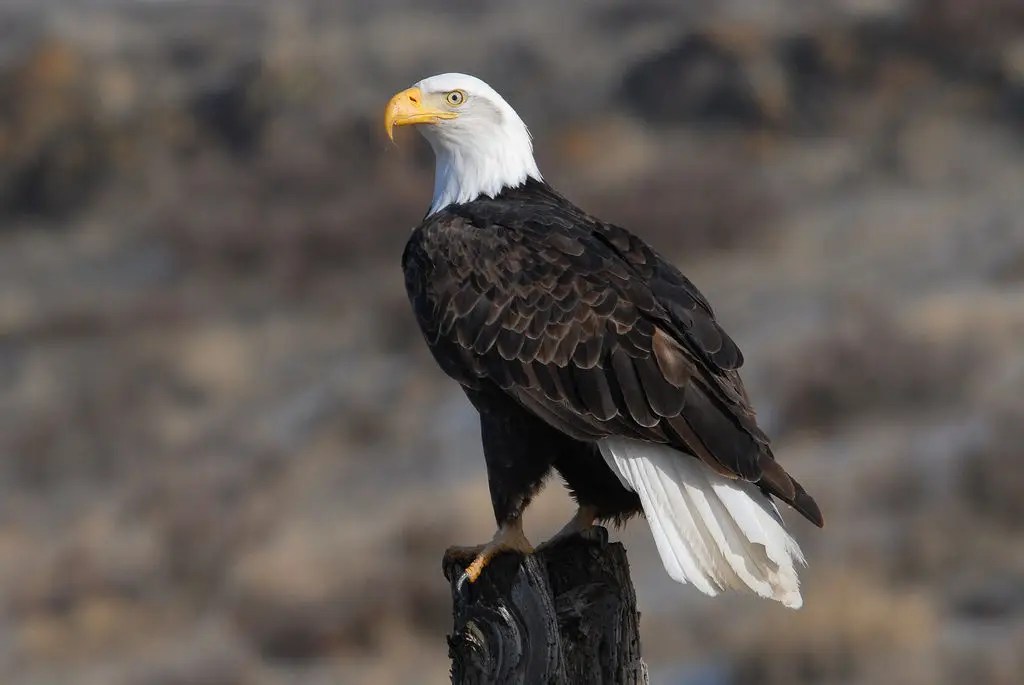
Darren Thackeray wrote a piece for the World Economic Forum on 10 conservation efforts that illustrate what we are capable of doing. One example from the article is the restoration of the Bald Eagle as a result of the band on using DDT as a pesticide which resulted in its removal from the threatened species list on 2007.
If our mindset shifts from being users to stewards, our practices shift from consuming to conserving, and our behaviors shift from hoarding to sharing, then we can make progress. The United Nations’ 17 sustainability goals are a framework for the work we have to do to right the ship. In addition, the Paris Climate Agreement is another global initiative that can bring us together to collaborate on addressing this complex problem.
The United States can take a leadership role in these efforts; however, we have to shed our anthropocentric viewpoint and adopt more inclusive, animistic view.
References:
Nina Lakhani, How dash for African oil and gas could wipe out Congo basin tropical forests? Guardian, November 10, 2022
Darren Thackeray, On World Wildlife Day, 10 conservation stories that will fill you with hope, World Economic Forum, March 3, 2020
 rryshke.org
Leave a comment