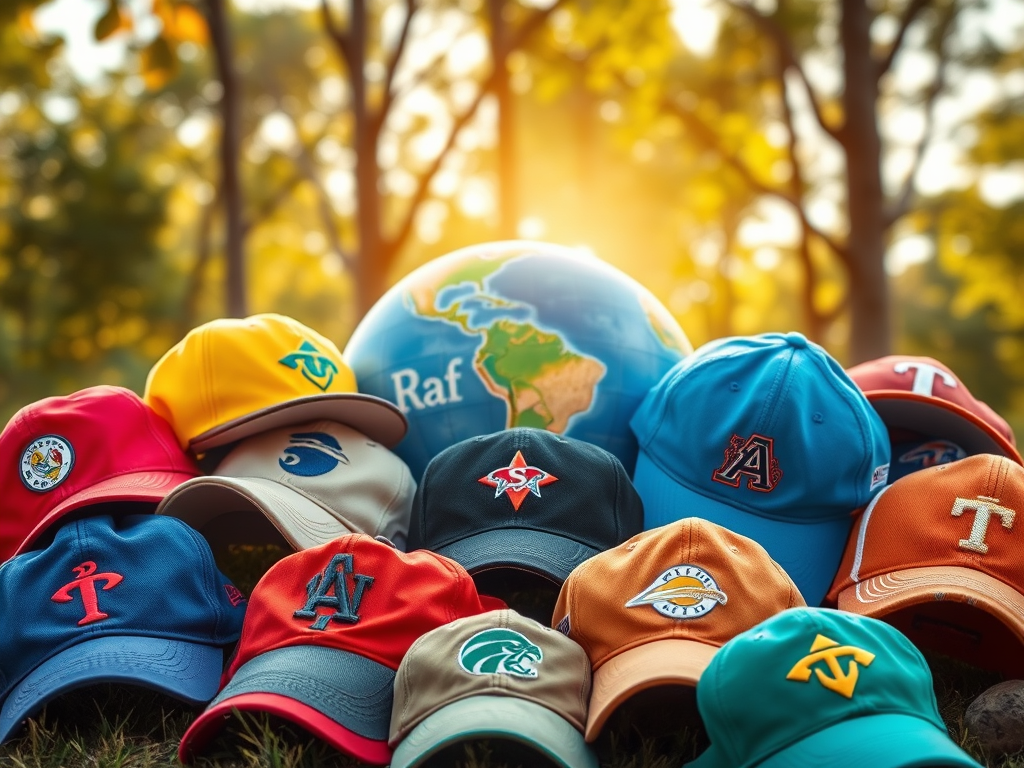
Are you wondering why I would write a piece about the connection of baseball caps to climate change? Does it sound like an irrelevant and pointless topic to ponder? Well, I looked inside my closet and counted 14 baseball caps. I paused and wondered was I contributing in some simple but obvious way to global warming. Excessive? That happens to be a lens I use to evaluate many of my behaviors.
By the way, I don’t have 14 “baseball caps.” I own 14 caps from a variety of affiliations. These include Atlanta Falcons, Pratt Institute, and two from the Masters Tournament. I have one that was a gift from a school I supported. Another from a visit to Quebec City and Zarbar’s in New York. Finally, I have caps from schools I worked for such as Marlborough and Westminster Schools. And more! I don’t actually own a cap representing a baseball team. However, that hasn’t stopped me from accumulating sports caps and non-sport caps along my journey.
So do baseball (sports) caps contribute to global warming? Well, from my research the answer is a resounding yes. Sports caps contribute to global warming as a result of their production and disposal. They are part of the environmental impact of the entire textile industry.
Here are four general areas in which the sports cap industry’s carbon footprint can be documented.
- Raw material production
- Use of cotton involves the use of pesticides, water, fertilizers, farm land use, and greenhouse gas emissions from harvesting.
- Synthetic materials like polyester and nylon come from fossil fuels.
- Manufacturing processes:
- Energy consumption in the processing of raw materials into sports cap components consumes fossil fuels.
- Dye materials used in the finishing process are generally hazardous and potential pollutants.
- Transportation of materials and finished products
- Moving raw materials, sport cap parts, and finished products through the global supply chain consumes fossil fuels. Approximately 70% of sports caps are made in China and shipped around the world.
- Disposal of textiles
- The disposal of textile products, like sports caps, is a challenge in the landfill industry.
As you can see from these four points, the sports cap industry is not as simple as resources-in-product-out. The global sports cap market is a complex system that is hard to unravel. Here is basic data that illustrates the impact of the industry as a part of our global trade system. (headgear is used to refer to all types of caps)
- The global headgear market was valued at $26 billion in 2022 and is projected to reach $44 billion by 2030.1
- The caps and hats segment of the headgear market generated $11 billion and is projected to reach $20 billion by 2032.
- North America dominates the sports cap market, with the U.S. selling 400 million baseball caps annually, making up around 80% of the market in 2021.
- China is thought to produce and ship approximately 70% of the world’s headgear.2
- Disposal of sports caps significantly contributes to the textile industry’s industrial waste. However, pinpointing the exact tonnage is difficult. Sports caps are made of various materials, including cotton, polyester, and plastic, which can contribute to textile waste in landfills. Plastic parts, such as brims and closures, can break down into microplastics and harm the environment.
In 2021, the global transportation sector relied on fossil fuels for approximately 95% of its energy needs. This makes the transportation sector the largest consumer of fossil fuels worldwide. As compared to fossil fuels used in the textile industry which is about 2%. The global production of fossil fuels amounts to ~500 exajoules. To put in perspective, “One exajoule potentially powers approximately 26,450,000 households for one year. So 500 exajoules is a very large amount of energy. While 2% of the 500 exajoules, or 10 exajoules, used globally by the textile industry is small, it is not insignificant. What’s the point? The point is that energy consumption in the production and disposal of hundreds of millions of sports caps is no small matter. Therefore, purchasing and eventually disposing of an inordinate number of them is excessive. The carbon footprint of the sports cap industry contributes to global warming.
I am making a commitment to look in my closets for other examples of excessive consumption and temper my needs. I am also making a stronger commitment to follow the 4 R strategy: Reduce, Reuse, Recycle, and Recover.3
Take a look in your closet and see what you find! Then ask yourself do I really need all of this. If lots of people change behaviors in small ways it will lead to larger changes. This is referred to as the Ripple Effect. When individuals take small actions that align with a particular goal (e.g., reducing waste, adopting a healthy habit), it can create a ripple effect, inspiring others to adopt similar behaviors. In his poem, Start Close In, David Whyte writes: “Take the first step, the step you don’t want to take.”4
- https://www.grandviewresearch.com/industry-analysis/headwear-market-report ↩︎
- https://en.people.cn/n3/2023/0421/c90000-20008955.html#:~:text=Ligezhuang%20town%20in%20Jiaozhou%2C%20a,third%20of%20the%20world’s%20total. ↩︎
- https://youtu.be/MqAyI6caMv4?si=PxXUYL9I-gzfW34a (a short video on the 4 Rs) ↩︎
- https://youtu.be/3Xp1THyuOUo?si=wTeLRqUAPMz42qsA (a poem by David Whyte) ↩︎
 rryshke.org
Leave a comment