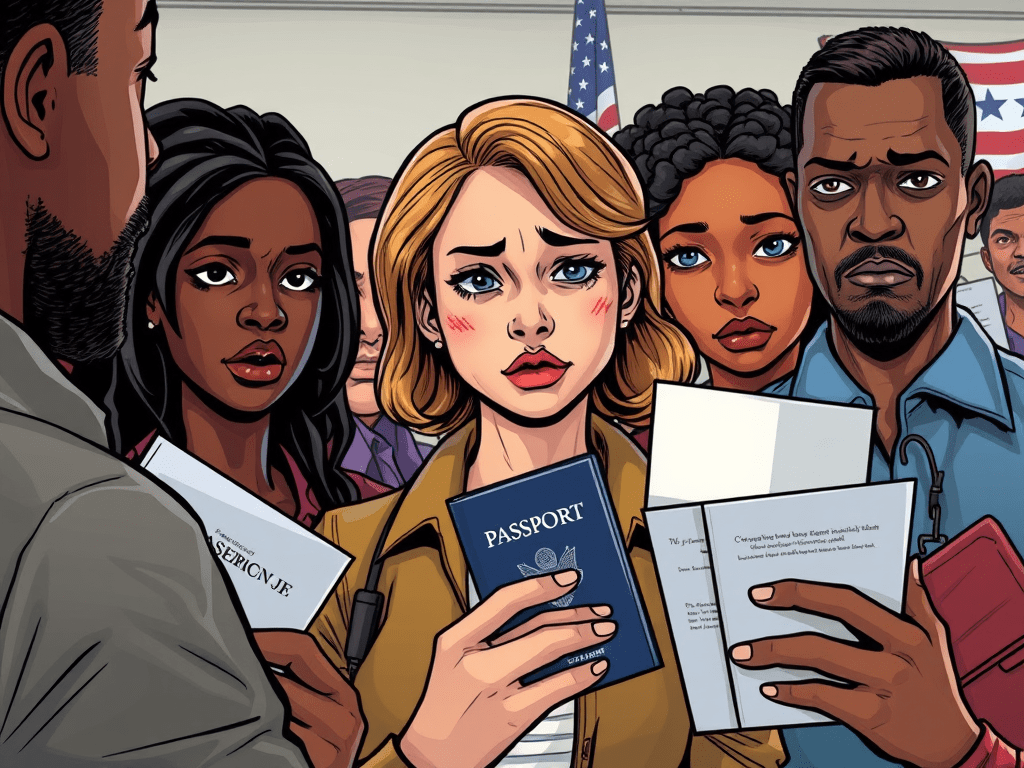
What is the SAVE Act (Safeguard American Voter Eligibility) ? In short, it is a Congressional initiative. It would require all American citizens registering to vote to present proof of citizenship in person. For the majority of Americans, this would be a passport or birth certificate. Only about 50% of Americans have a passport. Research indicates that about 9% of voting-age citizens lack ready access to proof of citizenship documents like birth certificates. That’s about 21 million Americans. Under the SAVE Act, Government-issued state driver’s licenses do not satisfy the bill’s requirements. This includes REAL IDs, military IDs, or tribal IDs. Finally, the enactment of the SAVE Act would alter the way citizens register to vote.
Today, Americans have multiple ways in which they can register to vote (see the diagram).
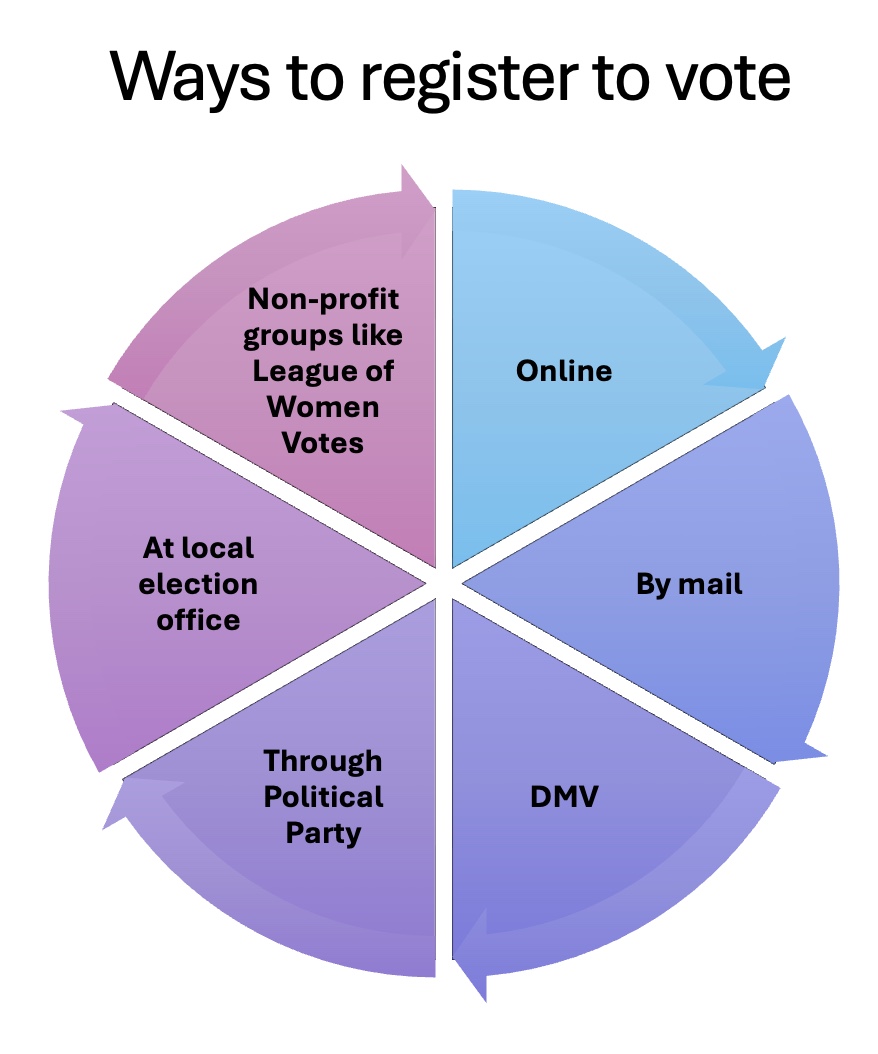
The SAVE ACT will require all voters to register through their local board of election office. They must bring documentation to prove they’re American citizens. Currently, about 95% of voters register online, by mail, through their DMV (Department of Motor Vehicles), during campaigns through a political party, or through non-profit groups like the League of Women Voters. Only a small percentage, about 5%, register through their local board of election office. Because there are a variety of ways to register it is relatively easy and free. If the SAVE Act passes into law it will make voter registration more difficult. It eliminates the variety and adds costs, such as getting a passport, which is about $150.
On April 10, 2025, the House of Representatives passed the SAVE Act, sending it to the Senate for consideration. The bill was sponsored by Republican Chip Roy from Texas. Republicans support the SAVE Act because they’ve introduced the idea of voter fraud, led vociferously by President Trump. They believe the only way to assure election integrity is through the SAVE Act’s stricter registration requirements.
Is there a counter argument to refute the Republican rationale? From my research, here are a list of counterpoints.
- You can vote in U.S. federal, state, and local elections if you are a U.S. citizen. That is already outlined in the 14th Amendment. You can’t treat citizens of the US differently based on race, sexual identity, etc., denying them the right to vote. We don’t need another law because we have one.
- The Brennan Center for Justice has researched and written about the myth of voter fraud. Likewise, the Brookings Institution conducted a comprehensive study and found voter fraud to be negligible (see two quotes shown below).
In the highly contested state of Pennsylvania, Heritage data goes back 30 years and covers 32 elections with over 100 million votes cast and found only 39 cases of voter fraud.
The percentage of fraudulent votes in Arizona over the last 25 years of elections was a minuscule .0000845%, and no election outcome in the U.S. has ever been altered by ballot fraud.
- The SAVE Act would end all nonpartisan nonprofit-led voter registration drives. Only government officials would be able to review and accept the proof of US citizenship. Groups like the NAACP and others have been instrumental in supporting our voting system.
- The SAVE Act doesn’t allow for proof of citizenship to be provided digitally or via paper copies. This would end Online Voter Registration and mail-in registration. Americans would be required to travel and endure longer lines every time they update their registration. In our digital age, it seems regressive to eliminate these forms of registration.
Voter fraud, the primary reason for introducing the SAVE Act, is extremely rare, and certainly not on a scale to influence an election.
Not only have these things certainly not happened, but fraud of this kind and scale is essentially impossible. Our elections are so decentralized and laced with safeguards, transparency, and verification systems that any fraud that does occur is either detected and reversed or on a scale too small to make a difference. 1
America has one of the safest and most effective voting systems in the world. States design and regulate their voting systems and go to great lengths to build in significant layers of security. There is little indication that we need a new law to regulate voting registration. Implementing such a law would make it more difficult and costly for our citizens.
- How Common is Voter Fraud, The Center for Election Innovation and Research, March 2024 ↩︎
 rryshke.org
Leave a comment