We have extensive information about our climate reality. All we have to do is open our eyes, scan the horizon, and witness the changes happening everywhere. Here are a few of the situations that if we open our eyes, empathize with people who have been impacted, and understand the underlying facts and conditions, we will see the climate is changing in ways that threatening our way of life.
- 709 tornados in the United States in 2024, 60% of them were EF1-EF4 that have done extensive damage and killed nearly 50 people
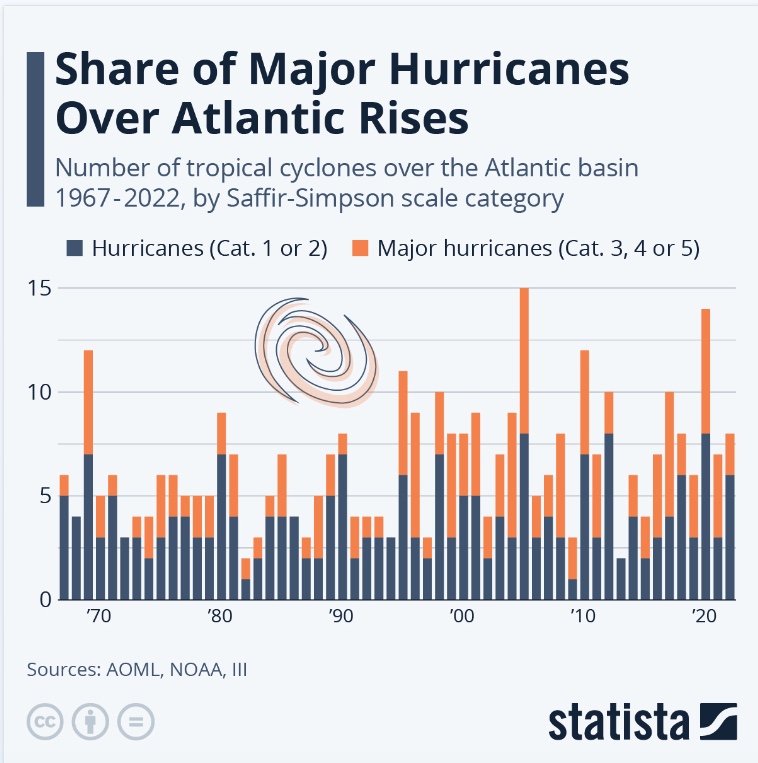
- Major hurricanes (cat. 3,4, or 5) over the Atlanta since 1994 are increasing (see the Graph 1 from NOAA and Statista). “While in the 1970-80s, the share of major hurricanes stood at an average of around 33 percent of all Atlantic hurricanes, it increased to an average of around 50 percent per year in the 2000-10s. This change translates to an average of 1.6 major hurricanes occurring per year in the 1970-80s as compared to 3-4 occurring annually today.” Climate change would appear to be one reason for the increase.
- Earth’s temperature has risen by 0.11 degrees F per decade since 1850. This is roughly 2 degrees F in total. This translates into warmer summers (see interactive graph from the NYT, Summers Are Getting Hotter)
- Since 1980 the extent of area burned by wildfires each year has increased. Of the 10 years with the largest acreage burned, all have occurred since 2004. This coincides with the warmest years on record. (see the Graph 2 from the EPA)
- The loss of biodiversity due to climate change. One example comes from a polar bear study focused on weight loss due to changing feeding patterns in response to a decrease in arctic ice flows that bears depend on for feeding on seals. The authors findings suggest there is a high risk of starvation for polar bears if they are forced to feed on land as ice flows diminish. (click here for link)
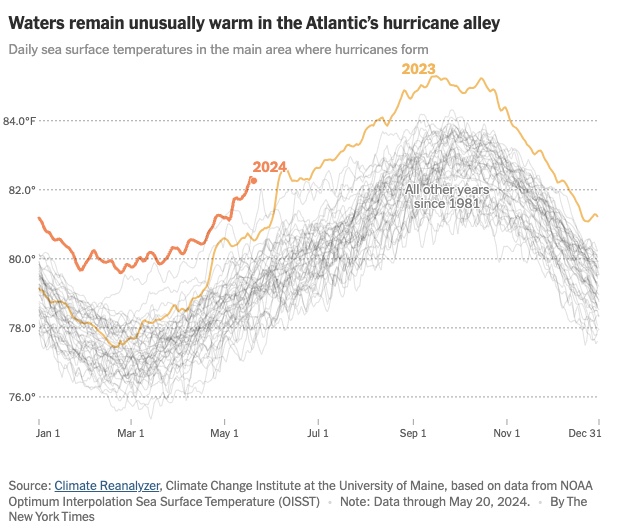
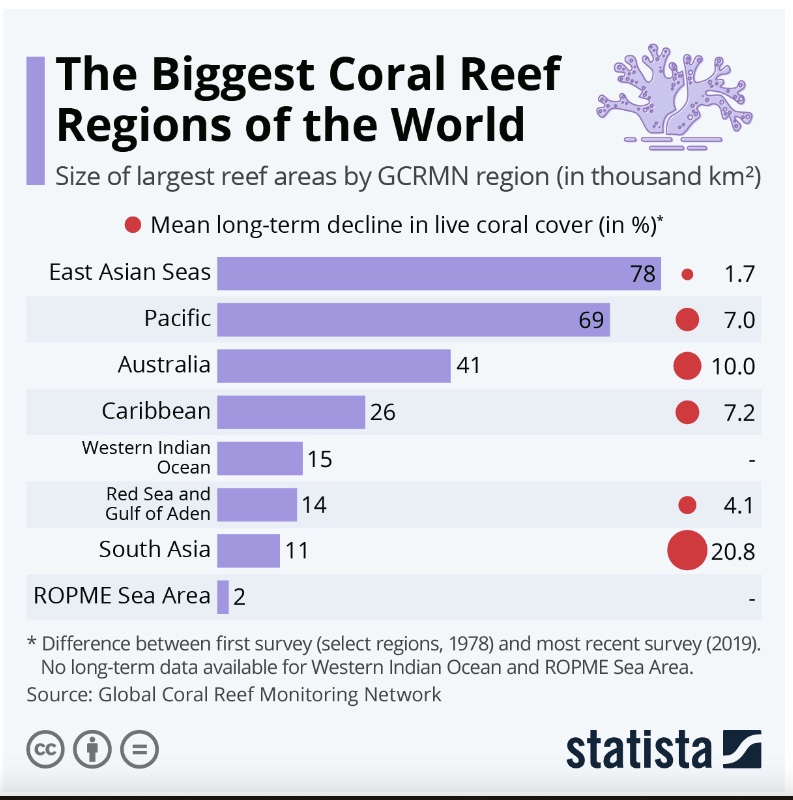
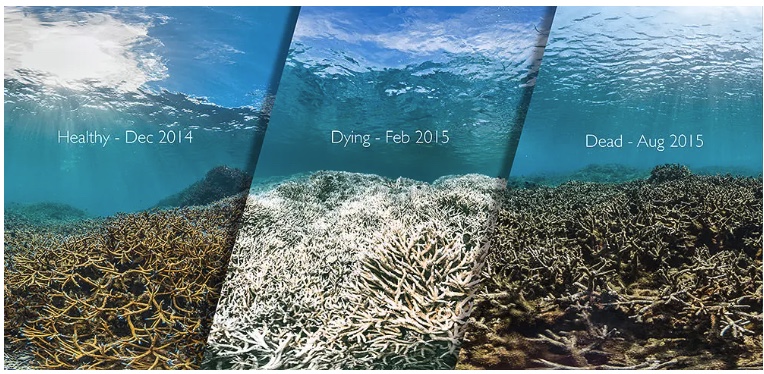
- The negative impact of warming ocean temperatures on the survivability of coral reefs. Coral reefs are one of the most vital ecosystems on Earth. They are believed to support nearly 25% of all marine species and they are a protective barrier for our coastlines. Yet their survival is being challenged by warming ocean temperatures due to increasing levels of CO2 in the atmosphere as a result of burning fossil fuels. As ocean temperatures rise, corals slowly die because the algae that sustain them are expelled and they “bleach.” While some corals seem to be adapting the question remains will they survive at the rate the oceans are warming? (see Graph 3 for what reefs are being most impacted and Graph 4 for the bleaching effect)
These are just a few examples that illustrate the current reality we face as a result of climate change. The question we should ask ourselves is: What is the story we want to leave for future generations? Do we want to leave them with a devastation story if we remain blinded by the darkness, unable to face the reality before us? On the other hand, we can leave them with a restoration story if we open our eyes and see the light, caring for the Planets natural resources.
We have to be willing to face tough questions about our way of life, making necessary sacrifices to minimize our destructive human footprint. Our time will run out if we don’t control our excessive and unconscious consumption. Taking care of our home, the one home we have, requires an understanding of the biosphere and the interdependence of all of its parts. We have a responsibility to come into the light.
Resources:
 rryshke.org
Leave a comment